Currently Empty: ₹0.00
Why Skill-Based Education is More Important Than Traditional Learning
May 23, 2026
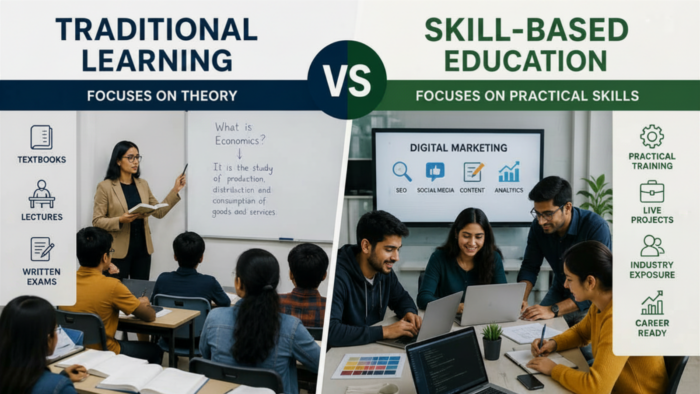
In today’s fast-changing world, education is no longer only about memorizing theories and passing exams. Companies and industries now look for candidates who have practical knowledge, Practical problem solving abilities, communication skills, and hands-on experience. This is why skill-based education has become more important than traditional learning.
What is Traditional Learning?
Traditional learning mainly focuses on theoretical knowledge, textbooks, classroom lectures, and written examinations. While this system helps students understand academic concepts, it often lacks practical exposure and industry-oriented training.
What is Skill-Based Education?
Skill-based education focuses on developing practical skills and real-world knowledge that students can apply directly in their careers. It combines theoretical learning with hands-on training, live projects, industry exposure, and practical applications.
Why Skill-Based Education is More Important Today
Modern industries are evolving rapidly due to technology, automation, and digital transformation. Employers now prefer candidates who can perform tasks efficiently from day one. Skill-based learning helps students become job-ready and confident in their abilities.
Improves Employment Opportunities
One of the biggest advantages of skill-based education is better career opportunities. Students who learn practical skills such as digital marketing, programming, graphic designing, web development, and communication skills are more likely to get jobs quickly.
Builds Practical Knowledge
Unlike traditional learning, skill-based education teaches students how to apply knowledge in real-life situations. Practical training sessions, assignments, and projects help students gain valuable experience.
Enhances Confidence and Creativity
When students work on practical tasks and live projects, they become more confident in their abilities. Skill-based education also encourages creativity, innovation, teamwork, and critical thinking.
Prepares Students for Future Careers
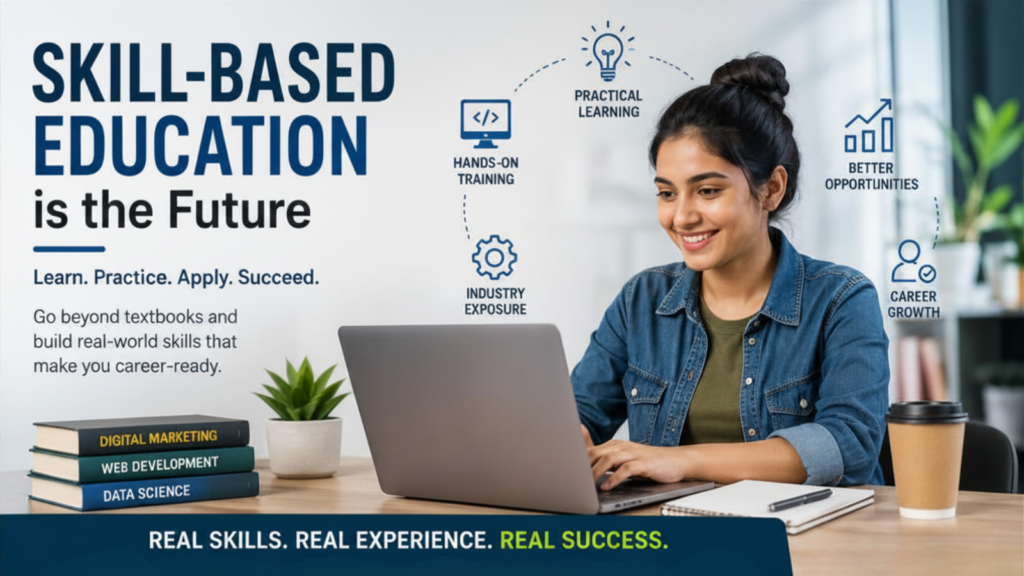
The future job market demands technical and professional skills. Fields such as Artificial Intelligence, Digital Marketing, Data Science, Software Development, and Graphic Designing require practical expertise rather than only theoretical knowledge.
Supports Entrepreneurship and Freelancing
Skill-based education not only prepares students for jobs but also helps them become entrepreneurs and freelancers. Skills like website development, digital marketing, content creation, and designing allow individuals to work independently and earn income online.
The Role of Training Institutes
Professional institutes like Inspire Training Academy focus on practical learning and career-oriented training. Such institutes help students develop industry-relevant skills through expert guidance, live projects, and placement support.
Conclusion
Skill-based education is becoming the foundation of career success in the modern world. While traditional education remains important for academic knowledge, practical skills are essential for employment, career growth, and professional success. Students who focus on developing industry-oriented skills gain better opportunities, confidence, and long-term career stability.