Currently Empty: ₹0.00
AI+ Gaming™ (E-learning)
₹34,999.00
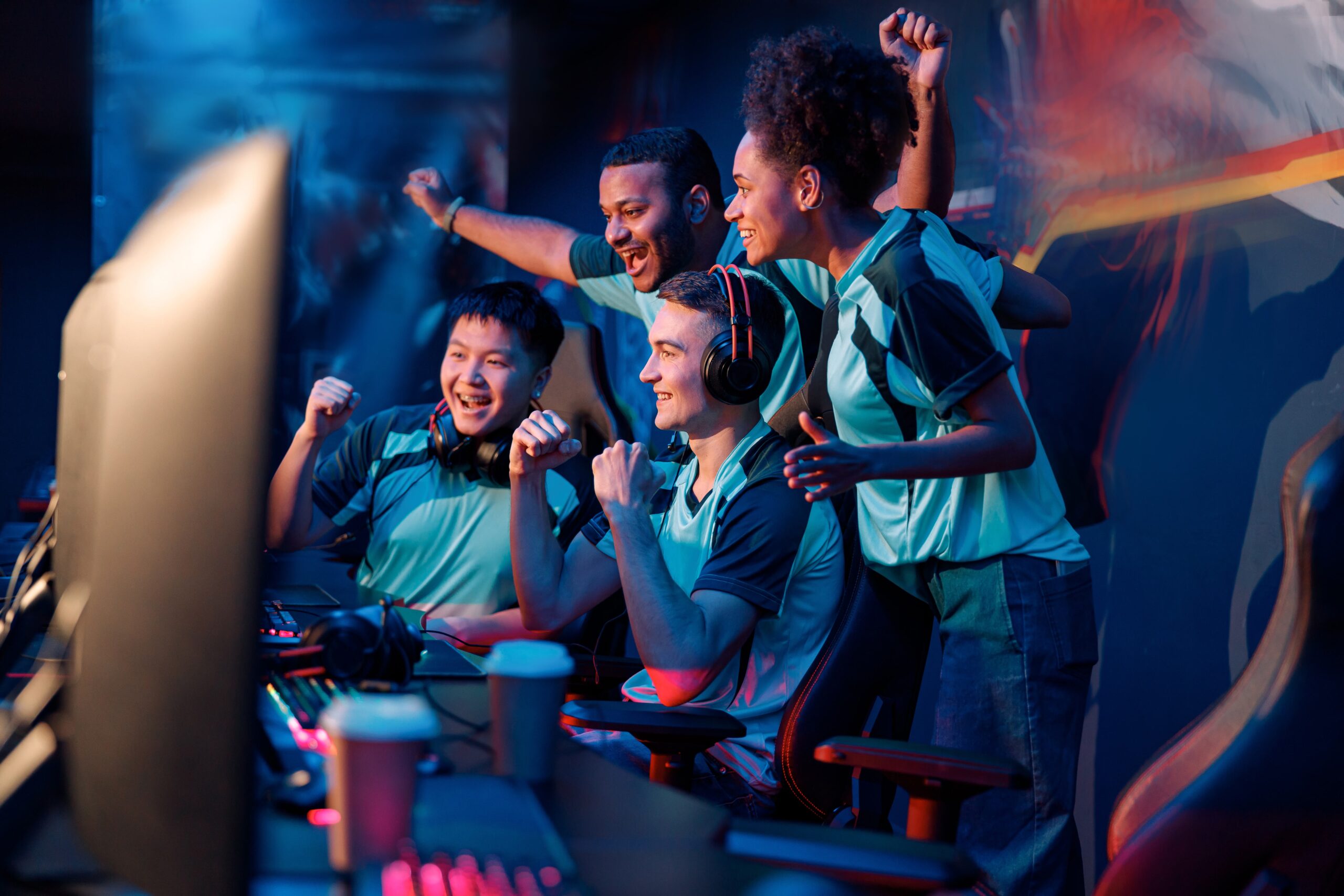
The AI + Gaming Certification equips professionals with cutting-edge knowledge at the intersection of artificial intelligence and interactive entertainment. Covering AI-driven game design, procedural content generation, player behavior modeling, and real-time decision-making, this certification prepares learners to innovate within game development and gaming experiences. Through hands-on projects and real world applications, participants gain skills in machine learning, neural networks, and reinforcement learning tailored for gaming environments. Ideal for developers, designers, and tech enthusiasts, this program ensures participants are industry-ready to integrate AI technologies that enhance gameplay, personalization, and player engagement in next-generation gaming ecosystems.
AI+ Gaming™ – Course Outline
Program Overview
The AI+ Gaming™ certification is designed to equip learners with practical and applied skills in Artificial Intelligence (AI) for game development and interactive entertainment systems. The program focuses on how AI is transforming modern gaming through intelligent NPCs, procedural content generation, adaptive gameplay, player behavior analytics, and real-time decision systems.
Participants will explore both the technical and creative sides of AI in gaming, including game AI architecture, reinforcement learning, pathfinding algorithms, generative AI for content creation, and immersive player experience design. The course combines theory with hands-on development exercises to help learners build intelligent game systems and AI-powered gaming experiences.
Course Objectives
• Understand core AI concepts used in game development
• Design intelligent NPC behavior and decision-making systems
• Apply pathfinding and search algorithms in game environments
• Use machine learning for player behavior analysis
• Implement reinforcement learning in game mechanics
• Develop procedural content generation systems
• Integrate AI tools into game engines and pipelines
• Evaluate ethical considerations in AI-driven gaming
Target Audience
• Game developers and game designers
• AI/ML practitioners interested in gaming applications
• Software engineers in interactive media
• AR/VR developers and simulation engineers
• Digital artists and technical designers
• Students entering game development or AI fields
• Professionals in entertainment technology
Course Duration
- Self-Paced: 8 hours of content
Assessment & Certification
• Module-based quizzes and assessments
• Practical game AI development tasks
• Case study analysis
• Hands-on project submissions
• Final capstone game AI project
Certification:
Participants will receive the AI+ Gaming™ Certification upon successful completion.
Training Methodology
• E-Learning
Course Modules
Module 1: Introduction to AI in Games
• What is AI
• Evolution of AI in the gaming industry
• Types of AI in games
• Benefits, challenges, and innovations in game AI
Module 2: Game Design Principles Using AI
• Understanding game mechanics and player experience
• Role of AI in gameplay and narrative design
• Designing game environments for AI interaction
• AI-driven behavior vs traditional scripted logic
• Case study: Dynamic AI and narrative adaptation in Middle-earth: Shadow of Mordor
• Hands-on exercise: Designing adaptive NPC behavior and environment interaction
Module 3: Foundations of AI in Gaming
• Core AI concepts for gaming
• Search algorithms and pathfinding
• AI behavior modeling and procedural content generation (PCG)
• Introduction to machine learning and reinforcement learning
• Case study: AI in Minecraft — procedural generation and agent navigation
• Hands-on: Implementing A* pathfinding and FSM for NPC behavior
Module 4: Reinforcement Learning Fundamentals
• Core concepts: states, actions, rewards, policies, Q-learning
• Exploration vs exploitation in learning systems
• Deep Q Networks (DQN) and policy gradient methods
• Case study: Reinforcement learning in DeepMind’s AlphaGo
• Hands-on: Train a reinforcement learning model using OpenAI Gym GridWorld
Module 5: Planning and Decision Making in Games
• Minimax algorithm and alpha-beta pruning
• Monte Carlo Tree Search (MCTS)
• Applications in board games and real-time strategy (RTS) games
• Case study: Strategic AI in StarCraft II
• Hands-on implementation: Minimax algorithm for Tic-Tac-Toe
Module 6: AI Techniques in 2D/3D Virtual Gaming Environments
• Overview of 2D and 3D game environments
• Environment representation techniques
• Navigation and pathfinding in 2D/3D spaces
• Interaction and behavior systems in virtual environments
• Case study: AI in The Legend of Zelda: Breath of the Wild
• Hands-on: Building navigation and interaction systems in 2D/3D environments
Module 7: Adaptive Systems and Dynamic Difficulty
• Adaptive systems overview
• Dynamic difficulty adjustment (DDA) principles
• Player profiling and personalized gameplay
• AI techniques in adaptive systems
• Implementation strategies and tools
• Case study: AI Director in Left 4 Dead
• Hands-on: Developing adaptive difficulty system in Unity
Module 8: Future of AI in Gaming
• Generalist AI agents and transfer learning
• AI-powered game design and testing tools
• Ethical considerations and AI transparency
• Emerging technologies: VR/AR AI and esports coaching